

 Amelia Grace
There’s a reason Christmas pudding is traditionally made weeks, sometimes months, ahead of the day itself, and once you understand why, you’ll never leave it to the last minute again.
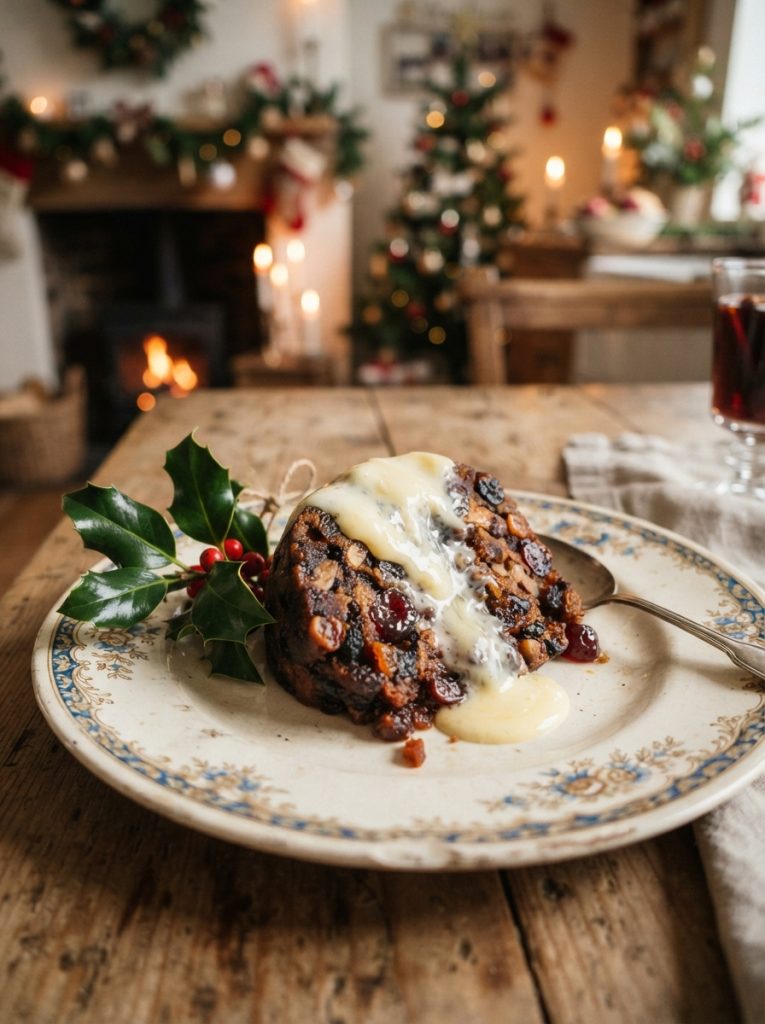
This is a proper, dense, fruit-packed pudding, steamed for hours until it turns deep brown and glossy, then set aside to mature and deepen in flavour before it’s steamed again briefly on the day itself.
It’s a bit of a project, admittedly, but it’s one of those traditions that genuinely rewards the time you put into it.
Why Christmas Pudding Needs Weeks to Mature Before Serving
Unlike most bakes, which are best eaten fresh, Christmas pudding is quite the opposite — it genuinely improves the longer it’s left to sit before serving.
As the pudding matures in a cool, dark place, the alcohol and spices continue to slowly develop and meld with the dried fruit, deepening the flavour considerably compared to a pudding eaten straight after its first steaming.
This is exactly why traditional recipes recommend making Christmas pudding as early as October or November, giving it proper weeks, ideally longer, to reach its full, rich flavour by the time Christmas Day arrives.
Ingredients for Delia Smith Christmas Pudding
- 150g shredded vegetarian suet
- 150g soft dark brown sugar
- 100g self-raising flour
- 100g fresh breadcrumbs
- 350g mixed dried fruit (currants, sultanas, raisins)
- 75g mixed candied peel, finely chopped
- 50g glacé cherries, chopped
- 1 large cooking apple, peeled, cored and grated
- Zest and juice of 1 orange
- 2 large eggs
- 4 tbsp brandy, plus extra for feeding
- 100ml stout or ale
- 1 tsp mixed spice
- ½ tsp ground cinnamon
How to Make Delia Smith Christmas Pudding — Step by Step
Step 1 — Combine the Dry Ingredients
In a very large mixing bowl, combine the suet, sugar, flour, breadcrumbs, dried fruit, candied peel, glacé cherries and grated apple.
Step 2 — Add the Orange and Spices
Stir in the orange zest and juice, mixed spice and cinnamon.
Step 3 — Add the Wet Ingredients
Beat the eggs and add them to the mixture along with the brandy and stout or ale.
Step 4 — Mix Thoroughly
Stir everything together thoroughly, traditionally with everyone in the family taking a turn and making a wish. The mixture should be soft enough to drop off a spoon when tapped.
Step 5 — Fill the Pudding Basins
Grease two 1-litre pudding basins well. Divide the mixture evenly between them, pressing down firmly to remove any air pockets.
Step 6 — Cover the Basins
Cover each basin with a layer of baking parchment and a layer of foil, pleated in the middle to allow for expansion, and tie securely with string.
Step 7 — Steam
Place each basin in a large pan on an upturned saucer, with water coming halfway up the sides of the basin. Cover and steam for 6 hours, topping up the water regularly so the pan doesn’t boil dry.
Step 8 — Cool and Store
Once steamed, allow the puddings to cool completely, then re-cover with fresh parchment and foil. Store in a cool, dark place.
Step 9 — Feed Occasionally
Every couple of weeks, unwrap the top and spoon over a tablespoon of brandy, then re-cover.
Step 10 — Steam Again on the Day
On Christmas Day, steam the pudding for a further 2 hours before turning out and serving.
My Top Tips for the Best Delia Smith Christmas Pudding
Make it as early as you reasonably can. Even a month of maturing makes a genuine difference, but earlier, if you can manage it, is even better for flavour.
Keep the water topped up during steaming. This pudding needs a long, steady steam, and a pan boiling dry partway through can ruin hours of cooking, so check it regularly.
Feed the pudding with brandy every couple of weeks. This keeps it moist and continues developing the flavour right up until Christmas Day.
Make a wish while stirring, if you like tradition. It’s an old custom, but a lovely one to involve the whole family in.
Don’t skip the second steaming on the day. This final steam warms the pudding through properly and refreshes it for serving, even though it’s already fully cooked from the first long steam.
Serving Suggestions
Serve with a generous helping of brandy butter, or flambéed with warmed brandy poured over and set alight at the table for a proper dramatic finish. A jug of pouring cream or custard alongside is equally traditional.
How to Store Delia Smith Christmas Pudding
In the fridge: Not necessary for the maturing period — a cool, dark cupboard is traditional and works well.
At room temperature: Store wrapped in a cool, dark place for several weeks to months before serving, feeding occasionally with brandy.
In the freezer: Freeze the steamed, unfed pudding, well wrapped, for up to 1 year. Defrost fully before the final steaming and serving.

Delia Smith Christmas Pudding Recipe
Ingredients
Method
- Combine suet, sugar, flour, breadcrumbs, dried fruit, peel, cherries and apple.
- Stir in orange zest, juice and spices.
- Beat in eggs, brandy and stout.
- Mix thoroughly until well combined.
- Divide between two greased pudding basins.
- Cover with parchment and pleated foil, tied securely.
- Steam for 6 hours, topping up water regularly.
- Cool completely, then re-cover and store in a cool, dark place.
- Feed with brandy every couple of weeks.
- Steam for a further 2 hours on Christmas Day before serving.
Notes
Frequently Asked Questions About Delia Smith Christmas Pudding
How far ahead should I make Christmas pudding?
Traditionally, at least a month ahead, though many people make theirs even earlier, in October or November, for the fullest flavour by Christmas Day.
Do I have to feed it with brandy?
It’s not strictly essential, but it does help keep the pudding moist and continues developing the flavour, so I’d recommend it if you have the time.
Can I make this pudding without alcohol?
Yes, replace the brandy and stout with extra orange juice or strong black tea, though the pudding will keep for a slightly shorter time without the alcohol’s preserving effect.
Why does Christmas pudding need steaming twice?
The first long steam cooks the pudding fully and sets its structure, while the second, shorter steam on the day simply warms it through again for serving after weeks of storage.