 Amelia Grace
Quince is one of those fruits people either grow and don’t quite know what to do with, or never think to buy at all — and that’s a real shame, because quince jelly is one of the most beautiful preserves you can make.
The fruit itself is rock hard and far too astringent to eat raw, but simmered down slowly, it transforms completely.
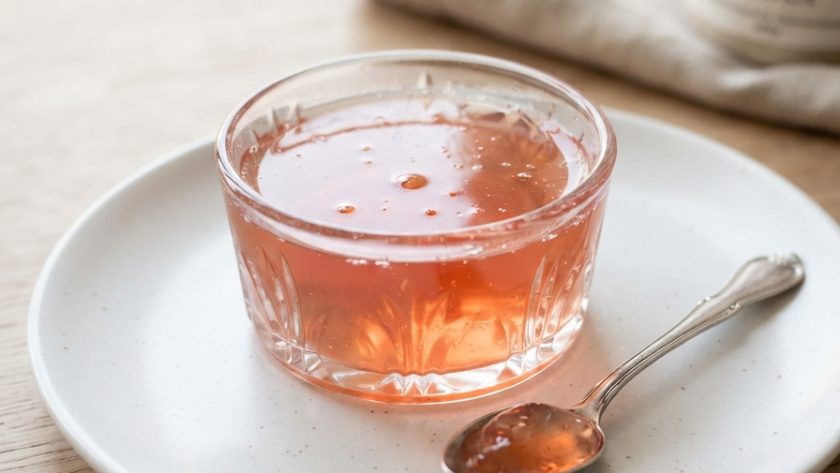
The flesh softens, the whole kitchen fills with a scent somewhere between apple, pear and honey, and the jelly that results sets to a stunning rose-pink colour that no other fruit quite manages.
It’s a little more involved than a straightforward jam, mostly because of the straining step, but the result is worth every bit of the wait.
Why Quince Turns Such a Beautiful Colour
The colour is genuinely one of the loveliest things about this recipe, and it isn’t down to anything you add — it comes entirely from the fruit itself.
Quince contains natural compounds that react during the long, slow cooking process, gradually deepening from a pale, cloudy liquid into a rich amber and finally a soft rose-pink as the jelly cooks.
The longer and more gently you cook the fruit before straining, the deeper that colour tends to be. Quince is also naturally very high in pectin, particularly in the skin and cores, which is exactly why this jelly sets so reliably without needing anything added.
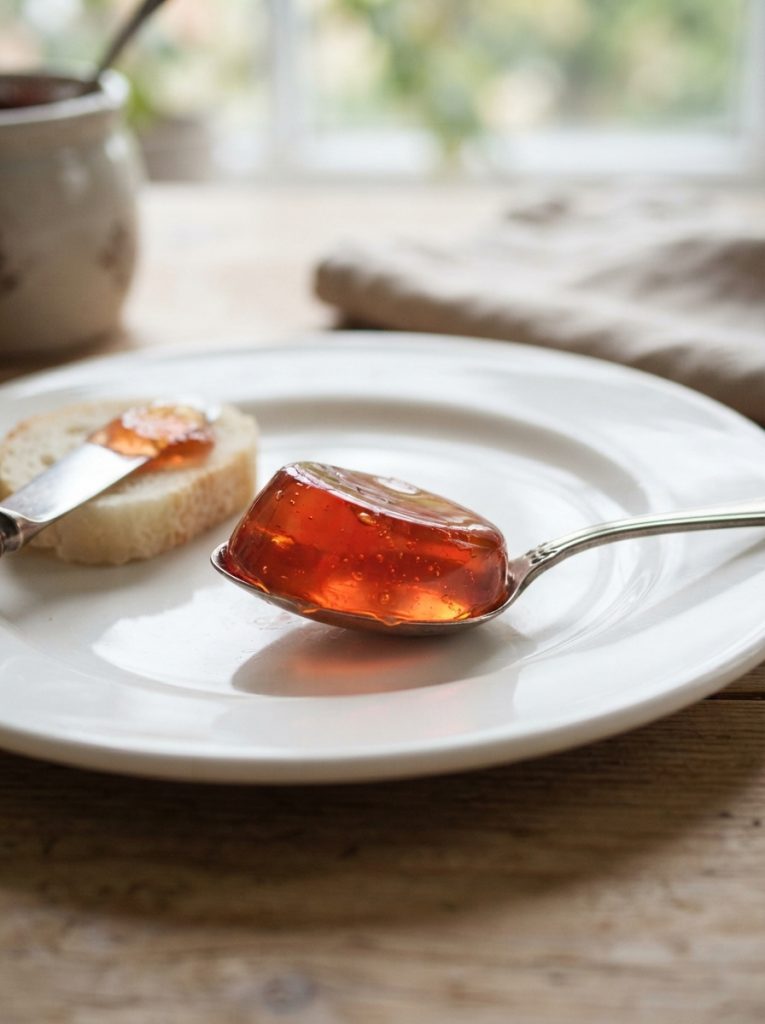
Ingredients for Delia Smith Quince Jelly
- 1.5kg quinces, roughly chopped (skin, cores and all)
- Juice of 1 lemon
- Water, to cover
- Granulated sugar (amount depends on the strained juice — see method)
How to Make Delia Smith Quince Jelly — Step by Step
Step 1 — Prepare the Quinces
Wash the quinces well to remove the fuzzy down on the skin, then roughly chop them, skin, cores and all. There’s no need to peel or core them at this stage — everything goes into the pot together.
Step 2 — Simmer the Fruit
Put the chopped quince into a large pan with the lemon juice and just enough water to cover the fruit. Bring to a simmer and cook gently for 45–60 minutes, until the quince is completely soft and mushy.
Step 3 — Strain Overnight
Line a large sieve or colander with a clean muslin cloth or jelly bag and set it over a large bowl. Pour in the cooked fruit and liquid, then leave it to strain undisturbed overnight. Resist the urge to press or squeeze the pulp — this will make your jelly cloudy rather than clear.
Step 4 — Measure the Juice
The next day, measure the strained juice. For every 600ml of juice, you’ll need 450g of granulated sugar.
Step 5 — Warm the Sugar
Gently warm the measured sugar on a low tray in the oven for a few minutes before adding it — this helps it dissolve more quickly and evenly once it goes into the pan.
Step 6 — Boil to Setting Point
Pour the strained juice into a clean pan, add the warmed sugar, and stir over a low heat until fully dissolved. Bring to a rolling boil and boil rapidly for 10–15 minutes.
Step 7 — Test for a Set
From the 10-minute mark, test by spooning a little jelly onto a cold saucer, leaving it for a minute, then pushing it with your fingertip. If it wrinkles and holds its shape, it’s ready.
Step 8 — Jar Immediately
Skim off any scum from the surface, then pour the jelly into clean, warm, sterilised jars and seal straight away.
My Top Tips for the Best Delia Smith Quince Jelly
Never squeeze the muslin or jelly bag. I know it’s tempting when you can see all that juice sitting there, but pressing the pulp forces cloudy sediment through, and quince jelly is meant to be beautifully clear.
Use the whole fruit, skin, cores and all. Most of the pectin that helps this jelly set sits in the skin and cores, so there’s no need to peel or core the quinces before cooking.
Be patient with the straining time. A full overnight strain gives you the clearest possible juice — rushing this step is the main reason people end up with a cloudy jelly.
Warm your sugar before adding it. This small step helps it dissolve more evenly and can make a noticeable difference to the clarity of the finished jelly.
Measure your juice properly before adding sugar. The ratio of 450g sugar to every 600ml of juice is what gives you a reliable set, so don’t guess this part.
Serving Suggestions
Quince jelly is wonderful with a strong, salty cheese like a mature cheddar or a good Spanish manchego — the sharp sweetness cuts through beautifully. It’s also lovely spread on warm toast, stirred into a pan sauce for roast pork or lamb, or spooned alongside a cheeseboard as something a little different from the usual chutney.
How to Store Delia Smith Quince Jelly
In the fridge: Once opened, keep in the fridge and use within 4 to 6 weeks.
At room temperature: Unopened, sealed jars keep in a cool, dark cupboard for up to a year.
In the freezer: Not recommended — like most jellies, the texture can change and become watery once thawed. It’s best bottled and stored in the cupboard.
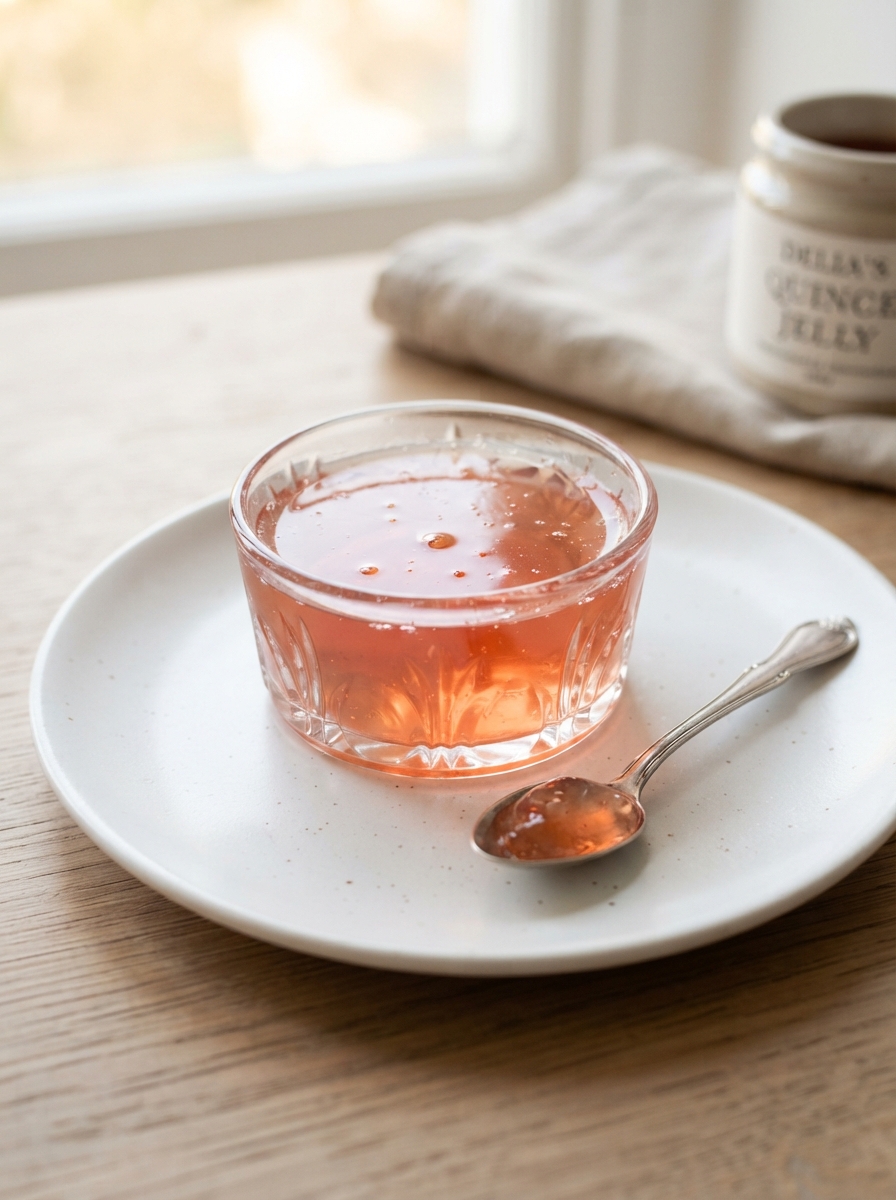
Delia Smith Quince Jelly Recipe
Ingredients
Method
- Wash and roughly chop the quinces, skin, cores and all.
- Simmer with lemon juice and water to cover for 45–60 minutes until soft.
- Strain through a muslin cloth or jelly bag overnight, without pressing.
- Measure the strained juice and calculate sugar at 450g per 600ml.
- Warm the sugar gently before adding.
- Combine juice and sugar in a clean pan, dissolve over low heat, then boil rapidly for 10–15 minutes.
- Test for a set on a cold saucer from the 10-minute mark.
- Skim, then pour into warm, sterilised jars and seal.
Notes
Frequently Asked Questions About Delia Smith Quince Jelly
Why is my quince jelly cloudy?
This almost always comes down to pressing or squeezing the muslin during straining. Let gravity do the work overnight, without disturbing the bag, for the clearest possible jelly.
Do I need to peel and core the quinces first?
No — this is one of the advantages of quince jelly. The skin and cores contain much of the pectin that helps the jelly set, so everything goes into the pot together, unpeeled and uncored.
Why hasn’t my jelly set?
This is usually because it wasn’t boiled at a proper rolling boil for long enough, or the sugar-to-juice ratio wasn’t accurate. Always measure your strained juice properly and test with the cold saucer method rather than relying on timing alone.
Can I use only ripe quinces, or do underripe ones work too?
Slightly underripe quinces actually work well here, as they tend to be higher in pectin, which helps with setting. Very ripe or bruised fruit is fine too, just avoid anything that’s gone soft or brown inside.