 Amelia Grace
Gooseberries are one of the great forgotten fruits of the British summer. They are sharp, green and a bit prickly to deal with, and most people walk straight past them at the farm shop.
That is their loss, because they make one of the best jams you can put in a jar.
The flavour is tangy and fragrant, a bit like a grape and a green apple having an argument, and it keeps a lovely sharpness even with plenty of sugar.
They are also packed with natural pectin, so the jam sets with very little fuss. It is a great first jam for anyone who has never tried preserving.
Why Gooseberries Must Be Softened Before the Sugar Goes In
This is the one rule that matters most with gooseberry jam.
Gooseberry skins are tough, and sugar makes them tougher. If you add the sugar while the fruit is still firm, the skins toughen and stay chewy no matter how long you boil the jam afterwards.
Simmering the gooseberries gently in water first, until the skins are completely soft and the fruit has collapsed, means the skins stay tender once the sugar goes in. It is a patient step, but it makes all the difference to the texture.
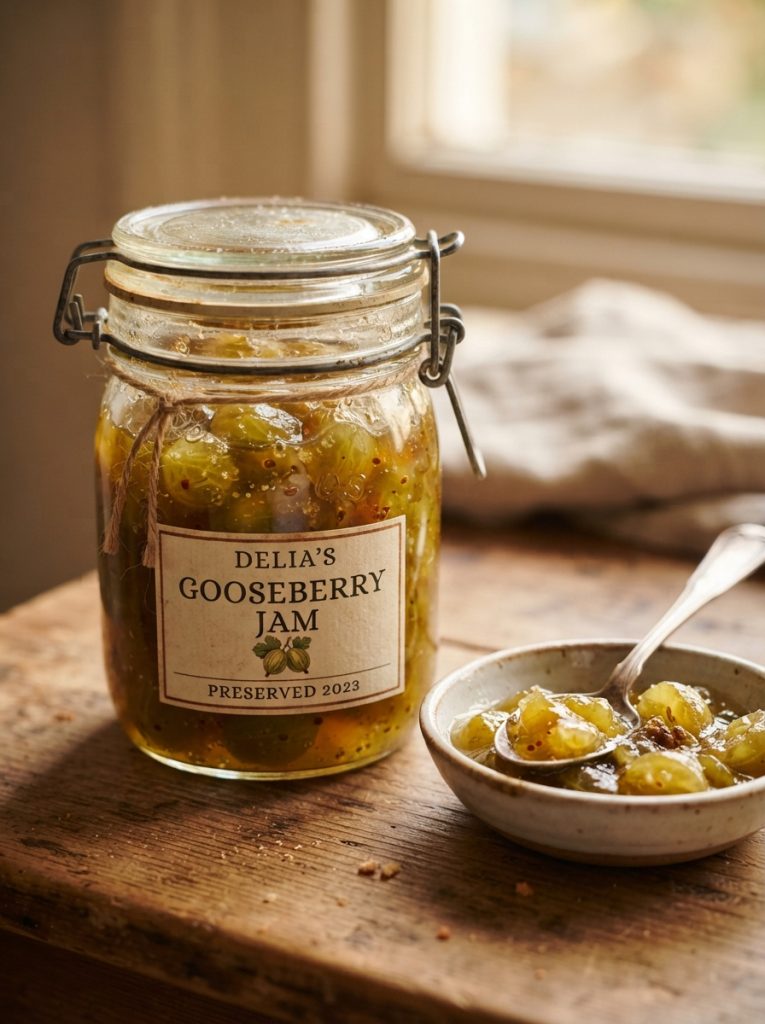
Ingredients for Delia Smith Gooseberry Jam
- 1kg gooseberries, topped and tailed
- 300ml water
- 1kg granulated sugar
- 3 elderflower heads, tied in a piece of muslin (optional, when in season)
How to Make Delia Smith Gooseberry Jam — Step by Step
Step 1 — Prepare the Jars
Wash 5 jam jars in hot soapy water, then dry them in a low oven at 140°C (120°C fan / Gas 1) for 15 minutes to sterilise. Put a couple of saucers in the freezer for testing the set.
Step 2 — Top and Tail the Fruit
Snip the stalk and flower ends off each gooseberry with scissors. Wash the fruit.
Step 3 — Soften the Gooseberries
Put the gooseberries and water into a large, heavy-based pan, with the elderflower parcel if using. Bring to a gentle simmer and cook for 15 to 20 minutes, stirring occasionally, until the fruit is completely soft and starting to collapse.
Step 4 — Add the Sugar
Remove the elderflower. Add the sugar and stir over a low heat until it has completely dissolved. You should not feel any grains when you run a spoon along the bottom of the pan.
Step 5 — Boil to Setting Point
Turn the heat up and bring to a fast, rolling boil. Boil for 10 to 15 minutes, skimming off any scum, until the jam reaches 105°C on a jam thermometer.
Step 6 — Test the Set
Spoon a little jam onto a chilled saucer, leave for 1 minute, then push it with your finger. If the surface wrinkles, it is ready. If not, boil for another 2 minutes and test again.
Step 7 — Rest and Pot
Take the pan off the heat and leave it for 5 minutes. Ladle the jam into the warm jars, seal straight away and label.
My Top Tips for the Best Delia Smith Gooseberry Jam
Soften the fruit fully before adding sugar. This is the secret to tender skins instead of chewy ones.
Use slightly underripe gooseberries. They are higher in pectin than very ripe ones, so the jam sets more reliably. Ripe, dessert gooseberries make a sweeter jam, but a softer set.
Snip, do not pull. Kitchen scissors are the fastest way to top and tail a bowlful of gooseberries.
Try elderflower. A few elderflower heads in muslin add a lovely muscat-like fragrance. Gooseberries and elderflower flower and fruit at roughly the same time, which is why they have always been paired.
Use a thermometer if you have one. Setting point is 105°C, which takes the guesswork out. The cold saucer test works equally well.
Let the jam stand for 5 minutes before potting. It stops the fruit floating up to the top of the jar.
Serving Suggestions
Spread it on warm scones with clotted cream, or on hot buttered toast. It is also excellent with mackerel and with sharp cheeses, and a spoonful stirred into plain yoghurt makes a good breakfast.
How to Store Delia Smith Gooseberry Jam
In the fridge: Once opened, keep in the fridge and use within 4 to 6 weeks.
At room temperature: Unopened, sealed jars keep in a cool, dark cupboard for up to a year.
In the freezer: Not necessary. Jam keeps perfectly in the cupboard, though you can freeze the raw topped and tailed gooseberries and make the jam later.
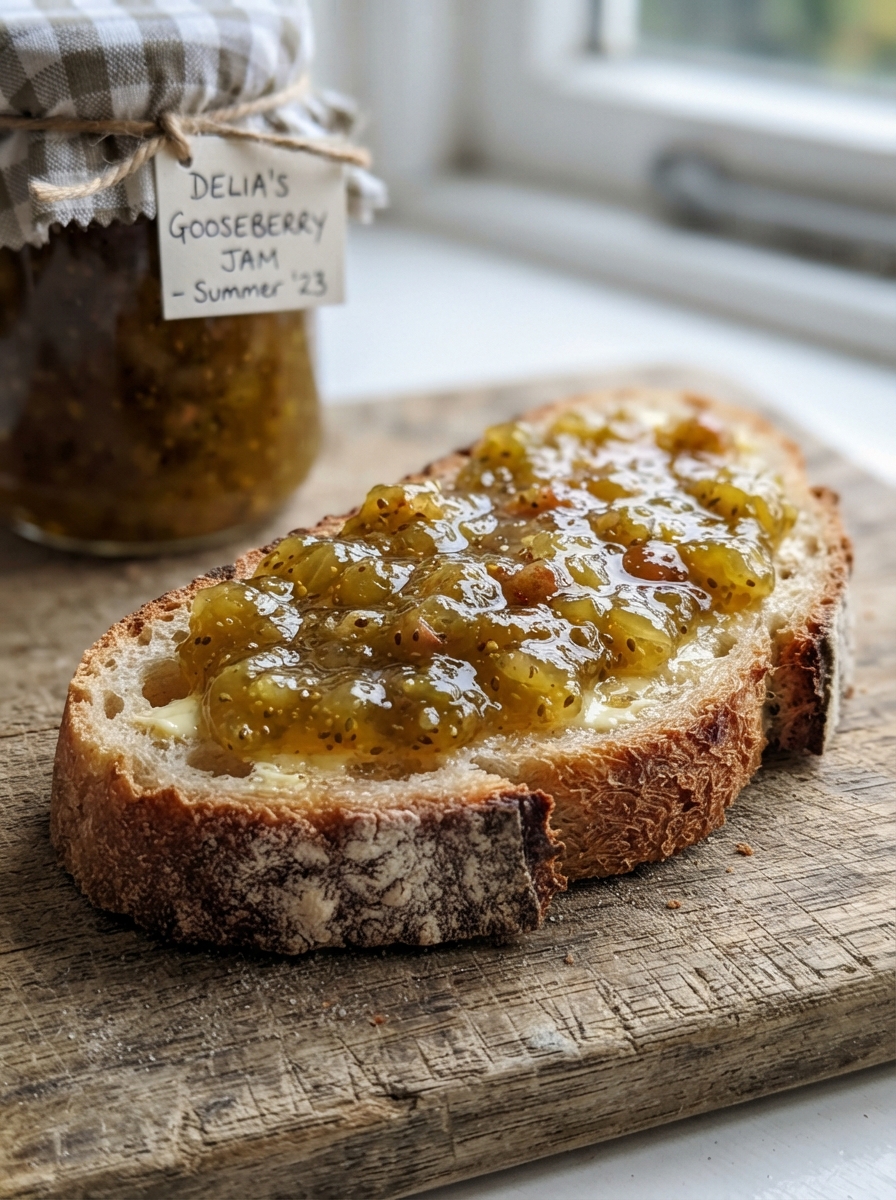
Delia Smith Gooseberry Jam Recipe
Ingredients
Method
- Sterilise the jars and chill a few saucers.
- Top and tail the gooseberries.
- Simmer with the water (and elderflower) for 15–20 minutes until completely soft.
- Add the sugar and stir until dissolved.
- Boil rapidly for 10–15 minutes until 105°C or a wrinkle forms on a chilled saucer.
- Rest for 5 minutes, then pot into warm jars and seal.
Notes
Frequently Asked Questions About Delia Smith Gooseberry Jam
Why is my jam full of tough skins?
The sugar was probably added before the gooseberries were fully soft. Simmer them in the water until they collapse completely, and only then add the sugar.
Why has my jam not set?
It needs to boil longer, at a hard rolling boil, until it reaches 105°C or wrinkles on a chilled saucer. Underripe fruit also helps, as it contains more pectin.
Can I use frozen gooseberries?
Yes. Use them straight from frozen, and allow a few extra minutes for them to soften before adding the sugar.
Why is my jam green or pink?
Green gooseberries make a pale golden-green jam, and red varieties give a pinkish one. Both are perfectly normal and delicious.