
 Amelia Grace
It seems almost too simple to need a recipe, and yet boiled eggs are one of the things people get wrong more often than almost anything else in the kitchen.
I spent years guessing at timing and ending up with either a chalky, overcooked yolk or a white that was barely set.
The fix turned out to be ridiculously simple — a proper, reliable timing guide based on how the egg goes into the water, and a few small habits that stop the shell cracking and make peeling far easier afterwards.
Why Starting Eggs in Already-Boiling Water Gives More Reliable Results
The single biggest factor in getting boiled eggs right every time is being consistent about how you start them.
Lowering eggs into water that’s already at a rolling boil, rather than starting them in cold water and bringing everything up to temperature together, means the cooking time is far more predictable and repeatable.
Cold-start methods are affected by how much water is in the pan and how quickly your particular hob heats up, which makes timing genuinely inconsistent from one attempt to the next. Starting from boiling water removes almost all of that variability.
Ingredients for Delia Smith Boiled Eggs
- Large eggs, at room temperature (as many as you need)
- Water, enough to fully cover the eggs
How to Make Delia Smith Boiled Eggs — Step by Step
Step 1 — Bring Water to a Rolling Boil
Fill a saucepan with enough water to fully cover the eggs and bring it to a rolling boil.
Step 2 — Lower in the Eggs
Using a slotted spoon, gently lower the room-temperature eggs into the boiling water, one at a time, to avoid cracking the shells.
Step 3 — Time from the Moment They Go In
Start your timer the instant the eggs go into the water. For soft-boiled with a runny yolk, cook for 4–5 minutes. For a jammy, slightly set yolk, cook for 6–7 minutes. For a fully hard-boiled egg with a firm yolk, cook for 9–10 minutes.
Step 4 — Prepare an Ice Bath
While the eggs cook, fill a bowl with cold water and a good handful of ice cubes.
Step 5 — Transfer Immediately
The moment the timer goes off, use a slotted spoon to transfer the eggs straight into the ice bath.
Step 6 — Cool Completely
Leave the eggs in the ice bath for at least 5 minutes for soft or jammy eggs, or a full 10 minutes for hard-boiled eggs, before peeling.
Step 7 — Peel Under Running Water
Tap each egg gently all over on a hard surface to crack the shell, then peel under a thin, gentle stream of cold running water, which helps the shell slip away more easily.
My Top Tips for the Best Delia Smith Boiled Eggs
Always use room-temperature eggs. Cold eggs straight from the fridge are more likely to crack when lowered into boiling water, and they also cook slightly less predictably.
Never skip the ice bath. This step stops the cooking process instantly, which is exactly what keeps a soft or jammy yolk from continuing to firm up after you take the egg out of the water.
Use slightly older eggs if peeling is a struggle. Very fresh eggs are notoriously harder to peel cleanly, as the shell clings more tightly to the white. Eggs that are 7 to 10 days old peel far more easily.
Add a pinch of salt to the cooking water. It’s a small habit, but it can help slightly with peeling and also means any cracked shells are less likely to leak too much white.
Time it precisely, not approximately. The difference between a jammy yolk and a fully hard one is often less than 2 minutes, so use a proper timer rather than guessing.
Serving Suggestions
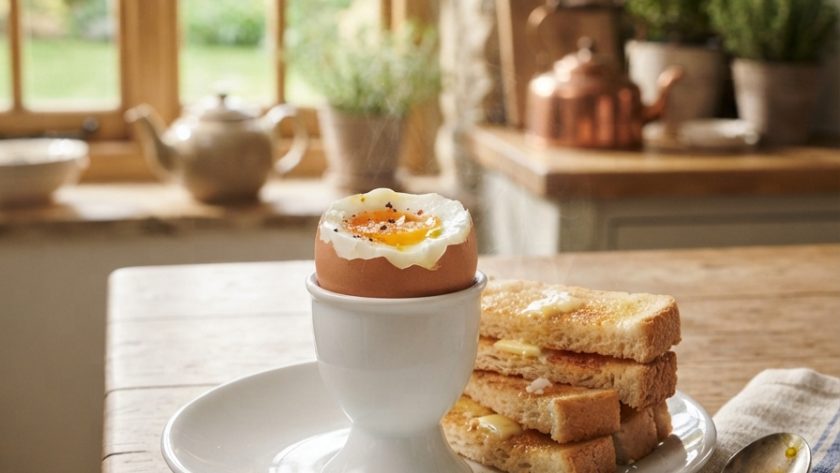
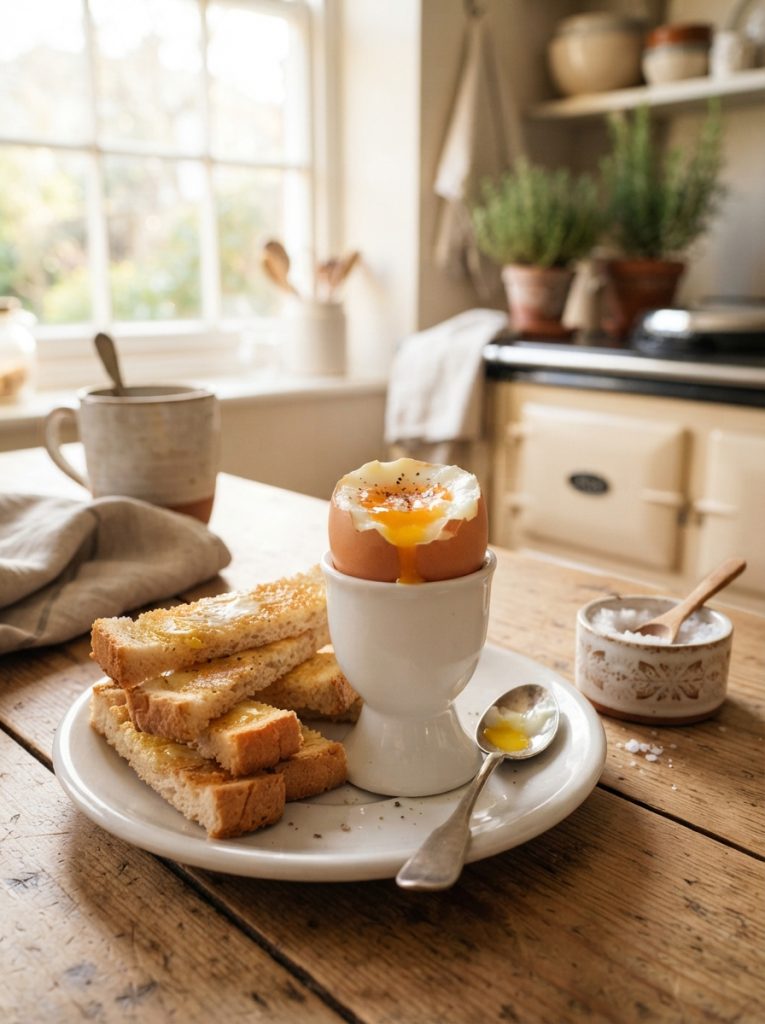
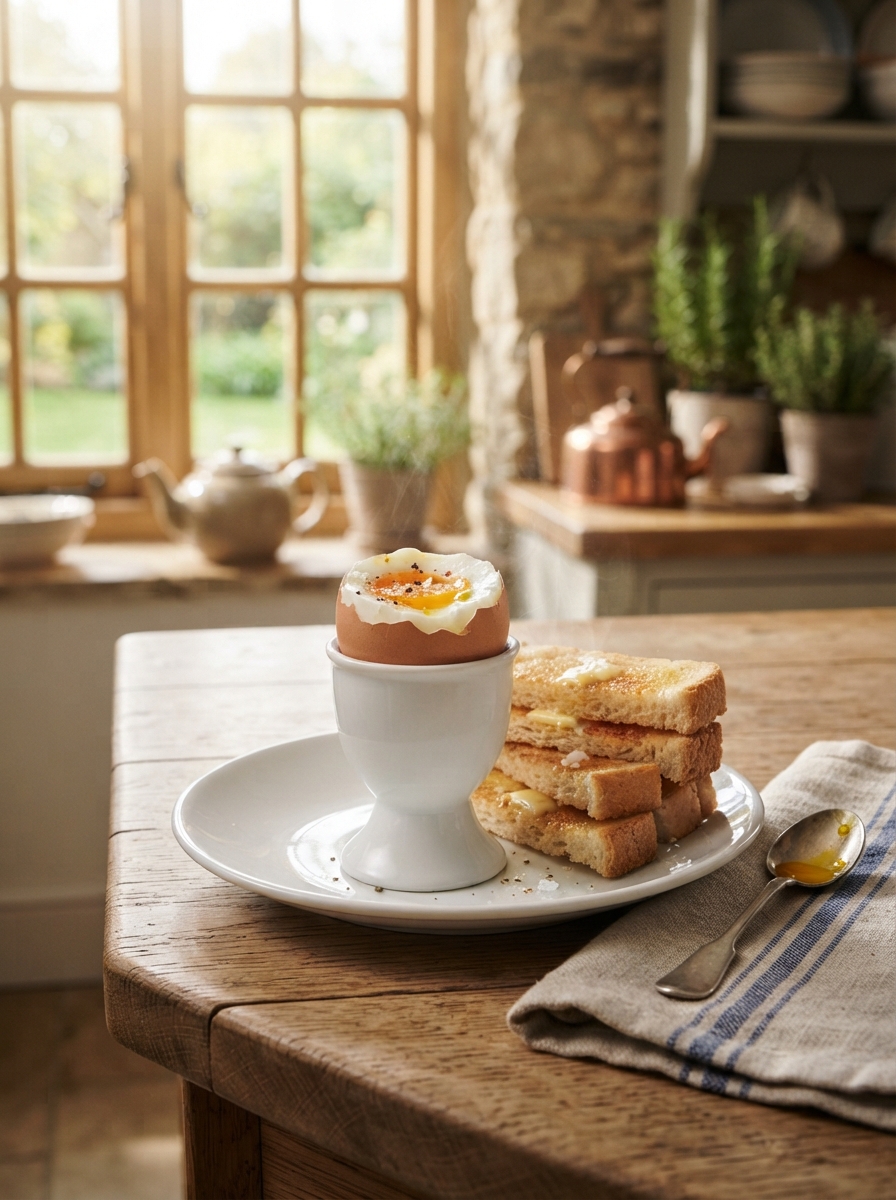
Soft-boiled eggs are wonderful with hot buttered toast soldiers for dipping. Jammy eggs are lovely halved over salads, ramen, or avocado toast, while fully hard-boiled eggs are perfect sliced into a salad, mashed for sandwiches, or simply seasoned and eaten as they are.
How to Store Delia Smith Boiled Eggs
In the fridge: Store peeled or unpeeled hard-boiled eggs in an airtight container for up to 1 week. Soft or jammy eggs are best eaten fresh, on the day they’re cooked.
At room temperature: Not suitable for more than a couple of hours — refrigerate promptly.
In the freezer: Not recommended. Whole boiled eggs, particularly the whites, become unpleasantly rubbery once frozen and thawed.
Delia Smith Boiled Eggs Recipe
Ingredients
Method
- Bring a pan of water to a rolling boil.
- Gently lower in the room-temperature eggs.
- Time from the moment they go in: 4–5 minutes soft, 6–7 minutes jammy, 9–10 minutes hard.
- Prepare a bowl of ice water while the eggs cook.
- Transfer the eggs to the ice bath the moment the timer goes off.
- Leave in the ice bath for 5–10 minutes.
- Tap and peel under running water.
Notes
Frequently Asked Questions About Delia Smith Boiled Eggs
Why do my eggs crack while boiling?
This usually happens when cold eggs go straight into boiling water, or when they’re dropped in too forcefully. Bring eggs to room temperature first, and lower them in gently with a spoon.
Why is my egg so hard to peel?
This is almost always down to using very fresh eggs, where the shell membrane clings tightly to the egg white. Using eggs that are at least a week old, and peeling under running water, both help considerably.
Can I boil eggs straight from the fridge?
You can, but you’ll need to add roughly 30 seconds to a minute to your cooking time to account for the lower starting temperature, and there’s a slightly higher risk of cracking.
How do I know if a boiled egg has gone off before I cook it?
Place the raw egg in a bowl of water — if it sinks and lies flat, it’s fresh. If it stands upright or floats, it’s best discarded, as this indicates it’s old or has gone bad.